

NEW VERSION
There is a new version of this product available. The product on this page has been discontinued and the datasheet and manual are provided for informational purposes.

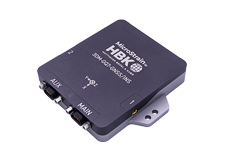
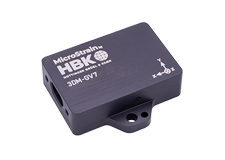
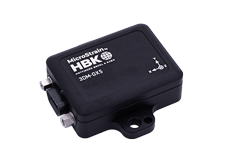
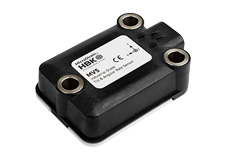
The 3DM-GX3® -45 high-performance, miniature GPS-Aided Inertial Navigation System (GPS/INS) combines MEMS inertial sensors, a highly-sensitive embedded GPS receiver, and a complex Extended Kalman Filter to generate optimal position, velocity, and attitude (PVA) estimates. This combination of technologies creates better short-term GPS-out performance, sustained-G attitude performance, and provides higher rate PVA data than typical GPS and AHRS sensors. Raw GPS data, IMU data, and filtered INS data are time-aligned and available as user-defined packets (either by polling or continuous stream).
Product no longer stocked – limited availability
Contact for pricing and lead time--a minimum order quantity may apply
Datasheet ManualBest in Class
Easiest to Use
Cost Effective
Navigation Specifications
|
Kalman Filter Performance |
|
|
Typical position accuracy † |
±2.5 m RMS horizontal, ±5 m RMS vertical |
|
Typical velocity accuracy † |
±0.1 m/s to ±0.75 m/s RMS (application and settings dependent) |
|
Typical attitude accuracy † |
±0.35 deg RMS roll & pitch ±1.0 deg RMS heading |
|
Update rate |
100 Hz |
|
Features |
|
|
Data output rate |
up to 1000 Hz |
AHRS Specifications
|
Attitude and Heading |
|
|
Attitude heading range |
360° about all 3 axes |
|
Accelerometer range |
±5g standard |
|
Gyroscope range |
±300°/sec standard |
|
Static accuracy |
±0.5° pitch, roll, heading typical for static test conditions |
|
Dynamic accuracy |
±2.0° pitch, roll, heading for dynamic (cyclic) test conditions and for arbitrary angles |
|
Long term drift |
eliminated by complimentary filter architecture |
|
Repeatability |
0.2° |
|
Resolution |
<0.1° |
|
Data output rate |
1 Hz to 100 Hz |
|
Filtering |
sensors sampled at 30 kHz, digitally filtered (user adjustable ) and scaled into physical units; coning and sculling integrals computed at 1 kHz |
|
Output modes |
acceleration, angular rate, magnetic field, deltaTheta, deltaVelocity, Euler angles, orientation matrix, quaternion, LLH position, NED velocity, GPS time, filter status, PVA estimate, PVA uncertainties, attitude as: quaternion, matrix, or Euler angles, gravity-free linear acceleration, bias-compensated angular rate |
|
General |
|
|
A/D resolution |
16 bits SAR oversampled to 17 bits |
|
Interface options |
USB 2.0 or RS232 |
|
Baud rate |
9,600 bps to 921,600 bps |
|
Power supply voltage |
+3.2 to +16 volts DC |
|
Power consumption |
at full performance with GPS lock: |
|
Connector |
micro-DB9 |
|
Operating temperature |
-40 °C to +65 °C |
|
Dimensions |
44 mm x 24 mm x 14 mm - excluding mounting tabs, width across tabs 37 mm |
|
Weight |
23 grams |
|
ROHS |
compliant |
|
Shock limit |
500 g |
|
Software utility |
CD in starter kit (XP/Vista/Win7/Win 8 compatible) |
|
Software development kit (SDK) |
complete data communications protocol and sample code |
| CE | compliant |
Sensor Specifications
|
Accels |
Gyros |
Mags |
|
|
Measurement range |
±5 g |
±300°/sec |
±2.5 Gauss |
|
Non-linearity |
±0.1 % fs |
±0.03 % fs |
±0.4 % fs |
|
In-run bias stability |
±0.04 mg |
18°/hr |
— |
|
Initial bias error |
±0.002 g |
±0.25°/sec |
±0.003 Gauss |
|
Scale factor stability |
±0.05 % |
±0.05 % |
±0.1 % |
|
Noise density |
80 µg/√Hz |
0.03°/sec/√Hz |
100 µGauss/√Hz |
|
Alignment error |
±0.05° |
±0.05° |
±0.05° |
|
User adjustable bandwidth |
225 Hz max |
440 Hz max |
230 Hz max |
|
Sampling rate |
30 kHz |
30 kHz |
7.5 kHz max |
GPS Specifications
|
GPS Receiver |
|
|
GPS receiver type |
50-channel u-blox 6 engine GPS L1 C/A code SBAS: WAAS, EGNOS, MSAS |
|
Data output rate |
1 Hz to 4 Hz |
|
Time-to-First-Fix |
Cold starts: 27 sec Aided starts: 4 sec Hot starts: 1 sec |
|
GPS tacking and navigation sensitivity |
-159 dBm |
|
Sensitivity |
Tracking: -159 dBm Cold starts: -147 dBm Hot starts: -158 dBm |
|
GPS velocity accuracy |
0.1 m/sec |
|
GPS heading accuracy |
0.5° |
|
GPS horizontal position accuracy |
position: 2.5 m CEP SBAS: 2.0 m CEP |
|
GPS timepulse signal accuracy |
30 nsec RMS < 60 nsec 99% |
|
GPS acceleration limit |
≤ 4 g |
|
GPS altitude limit |
no limit |
|
GPS velocity limit |
500 m/sec (972 knots) |
|
GPS antenna connector |
MMCX type |
|
Options |
|
|
Accelerometer range |
±1.7 g, ±16 g, ±50 g |
|
Gyroscope range |
±50°/sec, ±600°/sec, ±1200°/sec |
† RMS values generated from actual vehicle testing (airborne & land) when compared to a reference navigation unit
General Documentation
Technical Notes
Mechanical Prints (Uncontrolled)
FAQ's
Video
Firmware Upgrade
Software Download
Software Development Kit
Using MIP Monitor software, to reset the device to the factory defaults:
This process does not erase any hard and soft iron calibration that may be on the device.
The Hard and Soft Iron Cal software we provide must be used to do that.
Our MIP Monitor software, as written, will not allow you to save the 12 hard and soft iron calibration coefficients to a file, and then read that file back into the software to rewrite the values to the inertial sensor.
However, you cand accomplish the task by recording the values that are displayed (or take a screen grab).
This would be followed by using the data communications protocol EEPROM Write command to write the values back into the device.
This would require either a terminal program or the ability to write software, an understanding of how to construct the command packets, and a list of the EEPROM addresses involved.
Please contact your Lord MicroStrain support engineer for further details.
The Internal or External GPS selector refers to the function that allows the user to turn off the on-board GPS and use a computer to send GPS updates to the device.
If you are using the internal GPS, always select ‘Internal’.
Refer to the data communications protocol if you intend to supply external GPS.
MIP Monitor software also has a test function that allows you to input user selected GPS parameters.
Without the magnetometer, the only heading reference is from the GPS and this heading reference can only be used on a platform that has some constant lateral motion. This is the only way GPS can get a good heading. Once a heading reference is obtained (either magnetometer or GPS heading) it can be maintained for a short time (less than 30 seconds typically) with just the gyroscopes. This, of course, would have to be done through a fusion filter external to the -35. The LORD MicroStrain 3DM-GX3-45 product actually has this functionality built-in.
The main difference between single byte (SB) and MIP is as follows:
The reason we created MIP was the higher reliability for communications and control, plus the ability to have custom data messages. SB was prone to phantom commands in a noisy environment. In addition, SB had a limited number of data combinations available.
To move code from Single Byte to MIP with simple applications is fairly painless if you follow some guidelines.
The impedance on the GPS connector is 50 ohms.
The 3DM-GX3 provides 3 volts power on the center pin of the connector (active antenna).
The ECCN is 7A994.
From time to time, MicroStrain releases firmware upgrades for its 3DM-GX3® inertial sensors. These firmware upgrades represent operating improvements, new functions, etc. In most cases, the user may download these upgrades and perform the upgrade using a simple step-by-step process. This technical note describes which firmware upgrades may be accomplished by the user and which firmware upgrades must be done at the factory. Familiarity with 3DM-GX3® operation is assumed. The upgrade procedure employs a Microsoft Windows computer and the Microsoft HyperTerminal utility.
The LORD MicroStrain 3DM-GX3-45 high-performance, miniature GPS-Aided Inertial Navigation System (GPS/INS) combines MEMS inertial sensors, a highly-sensitive embedded GPS receiver, and a complex Extended Kalman Filter to generate optimal position, velocity, and attitude (PVA) estimates. It is currently available with RS-232 and USB communication interfaces. A wireless communication interface can easily be added by employing off-the-shelf Bluetooth RS-232 adapters.
Many inertial applications incorporate dataloggers. The datalogger can take many forms: hardware or software, analog or digital, simple or complex, and/or combinations of all. For our purposes, let’s work through a simple-digital-software datalogger. In this case, datalogger software is installed on a computer. The inertial sensor is connected to the computer via an RS-232 communication interface. The inertial sensor is pre-programmed to automatically send data when powered. The computer receives the stream of data and the datalogger software continuously records the stream to a data file.
The LORD MicroStrain 3DM-GX3 inertial sensor family allows the user to pre-program the inertial sensor so that it continuously outputs specific data packets at specific sampling rates each time it is powered on. This functionality facilitates integration of the inertial sensor with other equipment and systems. For example, connection of the 3DM-GX3 inertial sensor to a datalogger becomes quite easy. The user pre-programs the 3DM-GX3 data output settings on his desktop, connects the 3DM-GX3® to the datalogger’s RS-232 port, powers the 3DM-GX3, and the datalogger records the inertial data. This technical note assumes some familiarity with your particular 3DM-GX3 inertial sensor and its accompanying MIP Monitor (Windows-based) software.
NMEA packets can be had by putting the 3DM-GX3-35 or 3DM-GX3-45 in GPS Direct mode and manipulating the devices with the GPS manufacturer’s software.
Here are two technical notes which show how this is done:
http://files.microstrain.com/8401-0017-Using-u-blox-Software-3DM-GX3-35-3DM-GX3-45.pdf
http://files.microstrain.com/8401-0013-Outputting-NMEA-Packets-to-GPS-Ready-Software.pdf
NMEA packets can also be generated in the user's own application by gathering the navigation data output by the 3DM-GX3-35 or 3DM-GX3-45 and formatting it into NMEA packets. The inertial sensor feeds navigation data to the host computer, the host computer formats the navigation data into NMEA packets, and sends them out the serial port to a NMEA-ready device.
The GPS antenna cable that ships with every 3DM-GX3-35 and 3DM-GX3-45 is 3 meters in length.
Cable length is important. The longer the cable, the lower the signal strength. If the user lengthens the cable, the signal strength will diminish. The loss of signal strength can only be empirically determined by trying out a particular installation. Loss of signal strength will manifest itself in the number of satellites seen, quality of data reception from satellites, etc.
No. The GPS Receiver only receives standard GPS signals. It does not receive Differential GPS (DGPS) signals. If the user requires DGPS input, the GX3 will accept DGPS via an external feed and in the case of the 3DM-GX3-45, incorporate it in its Kalman filter processing. To be clear: the on-board GPS will be bypassed in favor of the external GPS.
Wikipedia GPS: http://en.wikipedia.org/wiki/Global_Positioning_System
Wikipedia DGPS: http://en.wikipedia.org/wiki/Differential_GPS
No, the on-board GPS does not support this.... but if the user has a GPS that does, this external GPS can input its 'RTK-groomed' measurements into the 3DM-GX3-45 and the 3DM-GX3-45 will incorporate those measurements into the Kalman filter. To be clear: the on-board GPS will be bypassed in favor of the external GPS.
Wikipedia's definition: http://en.wikipedia.org/wiki/Real_Time_Kinematic
Real Time Kinematic (RTK) satellite navigation is a technique used to enhance the precision of position data derived from satellite-based positioning systems, being usable in conjunction with GPS, GLONASS and/or Galileo. It uses measurements of the phase of the signal′s carrier wave, rather than the information content of the signal, and relies on a single reference station to provide real-time corrections, providing up to centimetre-level accuracy. With reference to GPS in particular, the system is commonly referred to as Carrier-Phase Enhancement, or CPGPS. It has application in land survey and in hydrographic survey.
Here is a link to the 3DM-GX3-45 Theory of Operation: http://files.microstrain.com/3DM-GX3-45_Theory_of_Operation.pdf
Kalman Filter Performance
|
Typical position accuracy † |
±2.5 m RMS horizontal, ±5 m RMS vertical |
|
Typical velocity accuracy † |
±0.1 m/s to ±0.75 m/s RMS (application and settings dependent) |
|
Typical attitude accuracy † |
±0.35 deg RMS roll & |
† RMS values generated from actual vehicle testing (airborne & land) when compared to a reference navigation unit
Attitude and Heading (AHRS)
|
Static accuracy |
±0.5° pitch, roll, heading typical for static test conditions |
|
Dynamic accuracy |
±2.0° pitch, roll, heading for dynamic (cyclic) test conditions and for arbitrary angles |
GPS Receiver
|
GPS velocity accuracy |
0.1 m/sec |
|
GPS heading accuracy |
0.5° |
|
GPS horizontal position accuracy |
< 2.5 m Autonomous < 2.0 m SBAS (CEP, stationary 24 hours, SEP 3.5 m) |
|
GPS timepulse signal accuracy |
30 nsec RMS < 60 nsec 99% |
In a word, no. Precise Point Positioning is a Global Navigation Satellite System (GNSS) positioning method to calculate very precise positions up to few centimeter level using a single (GNSS) receiver in a dynamic and global reference framework like International Terrestrial Frame (ITRF). The 3DM-GX3-45 is not capable of this precision.
Here is a link to a detailed technical note: http://files.microstrain.com/Orientation%20Conversion%20formulas.pdf
Yes. We have had good success with several types of off-the-shelf USB to serial port adaptors, such as those from IOGear and Keyspan, which may be purchased through any of the electronics products distributors.
No – only one can be used at a time. The device auto-senses which communication signal is attached (USB or serial), and only uses that channel for communications.
The standard unit uses a specialized Ulti-Mate brand micro-DB9. This technical note contains more details: http://files.microstrain.com/TN-I0023_Inertia-Link_3DM-GX2_3DM-GX3_Pin-Outs.pdf
The OEM unit uses a Samtec FTSH-105-01-F-D-K. This technical note contains more details: http://files.microstrain.com/3DM-GX3-25_OEM_Footprint_and_Connector.pdf
LORD MicroStrain® suggests that you purchase additional connectors with your order.
The 3DM-GX3 USB and RS-232 communication interfaces are built to satisfy the standard USB-IF and EIA specifications. LORD MicroStrain® provides 6 foot cables as standard. Many techniques can be used to extend the length of the communication interfaces including powered USB hubs, USB boosters, RS-232 extenders, etc.
The 3DM-GX3 standard enclosure has been designed with precision alignment holes on the ‘ears’ of the enclosure to allow the user to install the unit with precise alignment to the rest of the components in the user’s application.
The 3DM-GX3 is calibrated at the factory. The user is also provided with Hard and Soft Iron Calibration software to field calibrate the GX3 in situ. This video further describes the function: http://www.microstrain.com/video/hard-soft-iron-calibration
Important note: Hard and soft iron calibration is not required for the 3DM-GX3-15 and the 3DM-GX315 OEM. These units do not contain magnetometers.
From time to time the 3DM-GX3 may need recalibration. For example, as a result of coming in contact with magnetic influences (magnets, motors, etc.), residual magnetism may be picked up by the on-board components which will alter the calibration. Another example: the 3DM-GX3 receives a severe shock, slightly altering the position of the circuit boards in relation to the enclosure, again altering the calibration. In these cases the unit should be returned to the factory for recalibration.
Yes. Any number of units can be operated by a host at the same time. Several considerations surround this implementation (primarily computing power) and we suggest that you discuss your requirements with LORD MicroStrain® sales or a support engineer.
For the standard units, here is a link to a detailed technical note: http://files.microstrain.com/TN-I0023_Inertia-Link_3DM-GX2_3DM-GX3_Pin-Outs.pdf
For the OEM units, here is a link to a detailed technical note: http://files.microstrain.com/3DM-GX3-25_OEM_Footprint_and_Connector.pdf
Yes, there are no limitations. However, if a user requires a ‘zeroing’ of the axes, this must be done in the user’s external application. Good practice dictates that the orientation matrix be used to calculate such zeroing. Please also be aware of the mathematical singularity in Euler angles.
The user should be aware that the Euler angle formulation in general contains a mathematical singularity at Pitch = +90 or –90 degrees. In practice, poor numerical results will be present if the Pitch angle exceeds +/-70 degrees. In applications where the Pitch angle cannot be guaranteed to exceed these values, it is recommended that the orientation matrix output be utilized instead.
Yes. The sampling rates are user adjustable.
For the -15 and -25, the user may set the sampling rate at up to 1000 Hz depending on the data quantity.
For the -35, the user may set the AHRS sampling rate up to 1000 Hz depending on the data quantity and the GPS sampling rate up to 4 Hz.
For the -45, the user may set the Navigation sampling rate up to 100 Hz.
The baud rate is user adjustable and may be set to 9600, 19200, 115200 (default), 230400, 460800, and 921600.
Yes. The presence of strong magnetic fields or large magnetic materials will distort Earth’s weak local magnetic field and this will influence the on-board magnetometers. A hard and soft iron calibration software utility is provided to field calibrate the 3DM-GX3-25, 3DM-GX3-25 OEM, 3DM-GX3-35 and 3DM-GX3-45.
The 3DM-GX3-15 and 3DM-GX3-15 OEM do not contain magnetometers and are not affected by hard and/or soft iron interference.
The following orientation outputs formats are available:
A detailed description of these outputs can be found in the Data Communications Protocol manual of each product.
The standard units support both USB and RS-232 interface.
The OEM units support both USB and TTL.
Yes. We provide a complete data communications protocol manual which describes in detail each and every command and response that is available with the device. Applications may be developed in any programming environment (C, VB, LabVIEW, Linux, Matlab, etc.) which supports serial communication.
We provide a general application for Microsoft XP/Vista/Win 7 operating systems that configures, reads, displays and saves data generated by the device. This application (MIP Monitor) supports both the USB and RS-232 communication interfaces.
When you initially purchase a 3DM-GX3, a starter kit (SK) provides you with everything you need to get started! SKs include a 3DM-GX3 module, communication and power cables, software, manuals and GPS antenna if applicable. In subsequent purchases you may only require additional modules or other individual components. Several communication interfaces are available creating several starter kit variations.
Yes, but the method is a bit involved. The user would have to put the -45 in direct mode to the GPS, use the u-blox commands to retrieve the almanac, and put the -45 back into normal mode for regular use.
The GPS datasheet accuracy is CEP at 24 hours stationary, a common test condition for GPS. CEP is a 50% confidence number. Like other single (non-differential) GPS units, our accuracy is limited by constellation geometry, atmospheric, and clock error effects (largest contributors when selective availability is not included.) This pegs best performance at approximately 5 meters RMS dynamic. This is improved for areas where WAAS is enabled.
We have not performed extended duration tests against a surveyed point, but have tested against a higher-performing unit (with tightly-coupled filter.) Dynamic RMS position error during car and flight tests for the vertical channel, hover around 5m, with individual excursions out to about 10m. Telling which unit was more accurate at a given time, and at which extreme of the uncertainty ellipse each is at, is more difficult.
Yes, the antenna is powered at 3 Volts and draws 10 mA.
u-blox 5 AMY module.
No, our GPS supplier does not produce modules without this limitation.
4g maximum acceleration (must use Airborne dynamics mode). We have no published numbers on jerk from the GPS module manufacturer.
The attitude, position, velocity, and sensor bias states are all states within the same filter; therefore, they are calculated together.
The attitude, position, velocity, and sensor bias states are all states within the same filter; therefore, they are calculated together.
The 3DM-GX3-45 implements a loosely-coupled filter that uses the GPS solution (position and velocity) as an input to the filter.
The GPS PPS signal is available on pin 7. It can drive one high impedance TTL input.
No. A 3DM-GX3-35 can not be upgraded to a 3DM-GX3-45.
Yes, this can be done easily in software.
Yes. The Theory of Operation document will be of interest. It is available at: http://files.microstrain.com/3DM-GX3-45_Theory_of_Operation.pdf
Yes, several time-stamps are available depending on the output including AHRS time-stamp, GPS synch time-stamp and GPS correlation time-stamp. The GPS time-stamp is available across all 3 datasets including NAV, GPS and IMU.
The connector is an MMCX type connector. The non-magnetic extension cable with SMA connector provided by LORD MicroStrain® must be used to isolate the magnetometers from magnetic connectors.
© HBK, Inc 2023
Privacy Statement |
SensorCloud™ Services Agreement |
Terms & Conditions of Sale